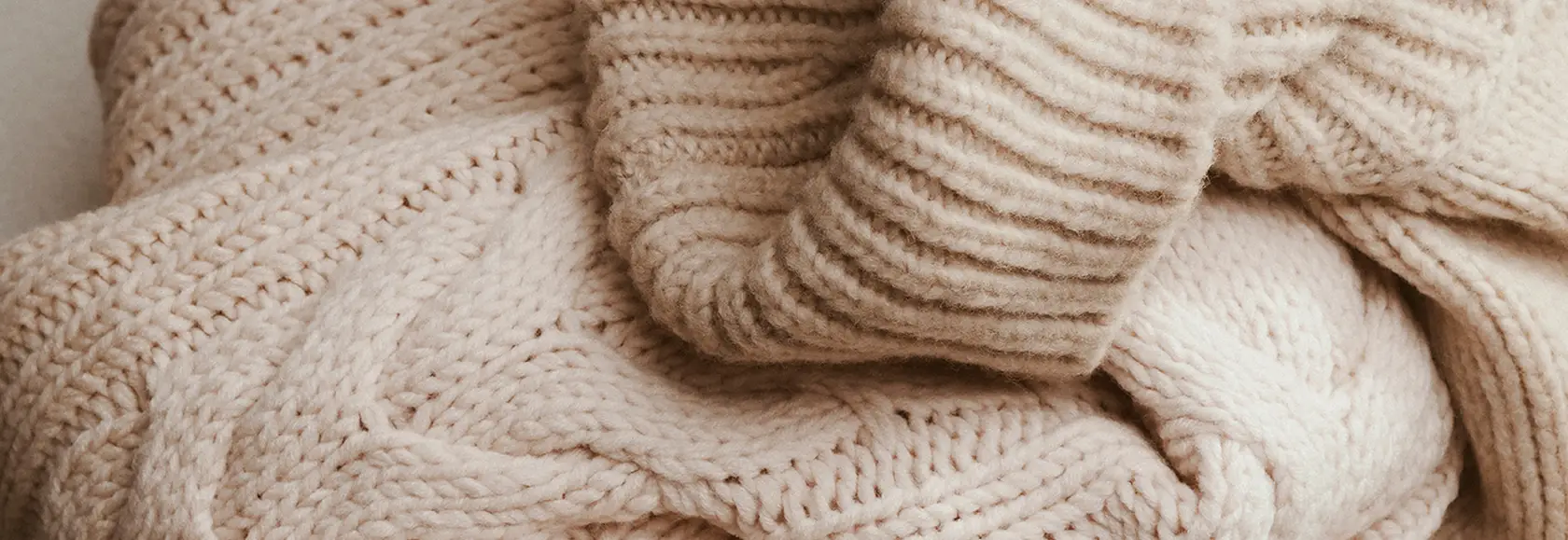
Not all materials are the same. Every fibre, fabric and surface has its own characteristics. Care requirements therefore vary, too. Wool is often best aired out. Linen needs plenty of room in the washing machine. Many types of leather are sensitive to water.
Here you’ll find care guidance for different materials. The instructions on the care label always take priority over general tips. Blends, coatings and special finishes may require different care instructions.
Cotton
Cotton is one of our most important materials. It is versatile and pleasant to wear. Depending on the weave, finish and material blend, it can react differently to water, heat and friction. Always check the care label first.
Cotton garments can often be washed at low temperatures. Sort laundry by colour and, if necessary, wash dark garments inside out. Avoid unnecessarily high temperatures. They can put stress on colours and fibres.
After washing, gently reshape cotton garments and air-dry them if the care label allows it. Only use a tumble dryer and iron in line with the care instructions.
WOOL
Wool often does not need to be washed immediately after wearing. Air wool garments out instead. If washing is necessary, follow the instructions on the care label.
If machine washing is allowed, choose a wool programme at a low temperature with a low spin speed. Use a detergent suitable for wool and dose it according to the manufacturer’s instructions. Gently press out excess water. Do not wring.
Wool jumpers and other knitwear should be dried flat. Place them on a dry towel and gently reshape them.
Wool and wool blends can pill. Carefully remove the small bobbles with a suitable fabric comb or fabric shaver.
SMOOTH LEATHER
Smooth leather should not be machine-washed. Protect the material from moisture as much as possible. If the leather becomes damp, let it dry at room temperature. Do not place it on a radiator or use a hairdryer.
Remove dust and light soiling with a soft, dry cloth. Only use care or waterproofing products if they are suitable for the specific leather.
For stubborn stains or heavier soiling, professional cleaning is recommended.
Down & feathers
First check whether the stain can be removed locally. Only wash the garment fully if the care label allows it.
Use a detergent suitable for down and choose the appropriate programme. Follow the care instructions for temperature and spin speed. An additional rinse cycle can remove detergent residue if the care label allows it.
Down garments must dry completely. If tumble drying is allowed, use the appropriate programme and gently shake out the jacket from time to time while it dries. Only use dryer balls if they are recommended for the specific product.
DENIM
Denim is durable. However, frequent washing and high heat can affect its colour and shape. Light soiling can often be removed with a damp cloth. Airing the garment between washes may also be enough.
If washing is necessary, follow the care label. If possible, wash denim inside out and with similar colours. Use a detergent for coloured laundry. Do not use bleach unless explicitly permitted.
After washing, reshape jeans and other denim garments and air-dry them if the care label recommends it. High heat can put stress on the material or cause it to shrink.
Denim shirts and blouses can often be steamed. Alternatively, iron them inside out at a low temperature if permitted. For jeans, careful hanging is often enough.
Lyocell & Modal
Lyocell and modal feel soft and fluid. Depending on the weave, finish and material blend, they can react differently to moisture and friction. Always follow the care label.
If machine washing is allowed, choose a gentle programme at a low temperature with a low spin speed. Do not wring. After washing, gently reshape the garment and dry it according to the care instructions.
Ironing at a low temperature is possible if the care label allows it. A thin cotton cloth between the iron and the material can provide additional protection.
VISCOSE
Viscose can be more delicate when wet. Only wash viscose garments in line with the instructions on the care label. If machine washing is allowed, a gentle programme at a low temperature with a low spin speed is usually suitable.
Do not wring. After washing, gently reshape the garment and air-dry it. Ironing at a low temperature is possible if the care label allows it. Preferably iron inside out.
Linen
Len potřebuje v pračce dostatek prostoru. Pračku proto nepřeplňujte. Řiďte se pokyny na štítku. U barveného lnu je často vhodná nízká teplota. Nízké otáčky mohou být k materiálu také šetrnější.
Po praní len opatrně vytvarujte a nechte jej uschnout na vzduchu, pokud to štítek dovoluje. Silné přímé slunce může vyšisovat barvy. Sušičku používejte pouze tehdy, pokud je výslovně povolena. Vysoké teploty mohou materiál namáhat nebo způsobit jeho sražení.
Přirozené mačkání je součástí charakteru lnu. Pokud chcete výraznější záhyby vyhladit, žehlete len ještě mírně vlhký a při teplotě uvedené na štítku.
POLYESTER & NYLON
How often a garment needs washing depends on how it is used and how soiled it is. For jackets, airing or spot-cleaning with a damp cloth is often enough between washes.
Wash polyester and nylon according to the care label. A low temperature and gentle programme are often suitable. Use a detergent that is suitable for the material and colour.
Air-dry synthetic materials whenever possible. Only use a tumble dryer if it is permitted for the garment in question. Careful hanging is often enough to smooth the garment. If ironing is allowed, choose a low temperature. Too much heat can deform or damage synthetic fibres.
Suede is sensitive to water, soap, and unsuitable cleaning agents. First, carefully remove light dirt with a soft brush. For suitable surfaces, you can also use a special leather eraser.
Some suede garments can be washed. Check the care label to see if this applies to your garment. Use only a suitable detergent and select the specified gentle cycle. Alternatively, hand washing may be permitted.
Dry suede according to the care instructions. After drying, gently brush the nap back into place with a soft brush.
Leather alternatives can be made from different materials, so their care requirements vary. The instructions on the care label are decisive.
On many materials, light soiling can be removed with a slightly damp cloth. Test the cleaning method on an inconspicuous area first.
Machine washing is only allowed if the care label explicitly says so. In that case, use the specified programme and a low temperature. Avoid high heat and intensive spinning. Both can deform or damage the material.